Deep Dive
Smaller, Cheaper, Better: The Economics of Accuracy
July 15, 2025 · 5 min read · By Yusuf Tunc Karadut
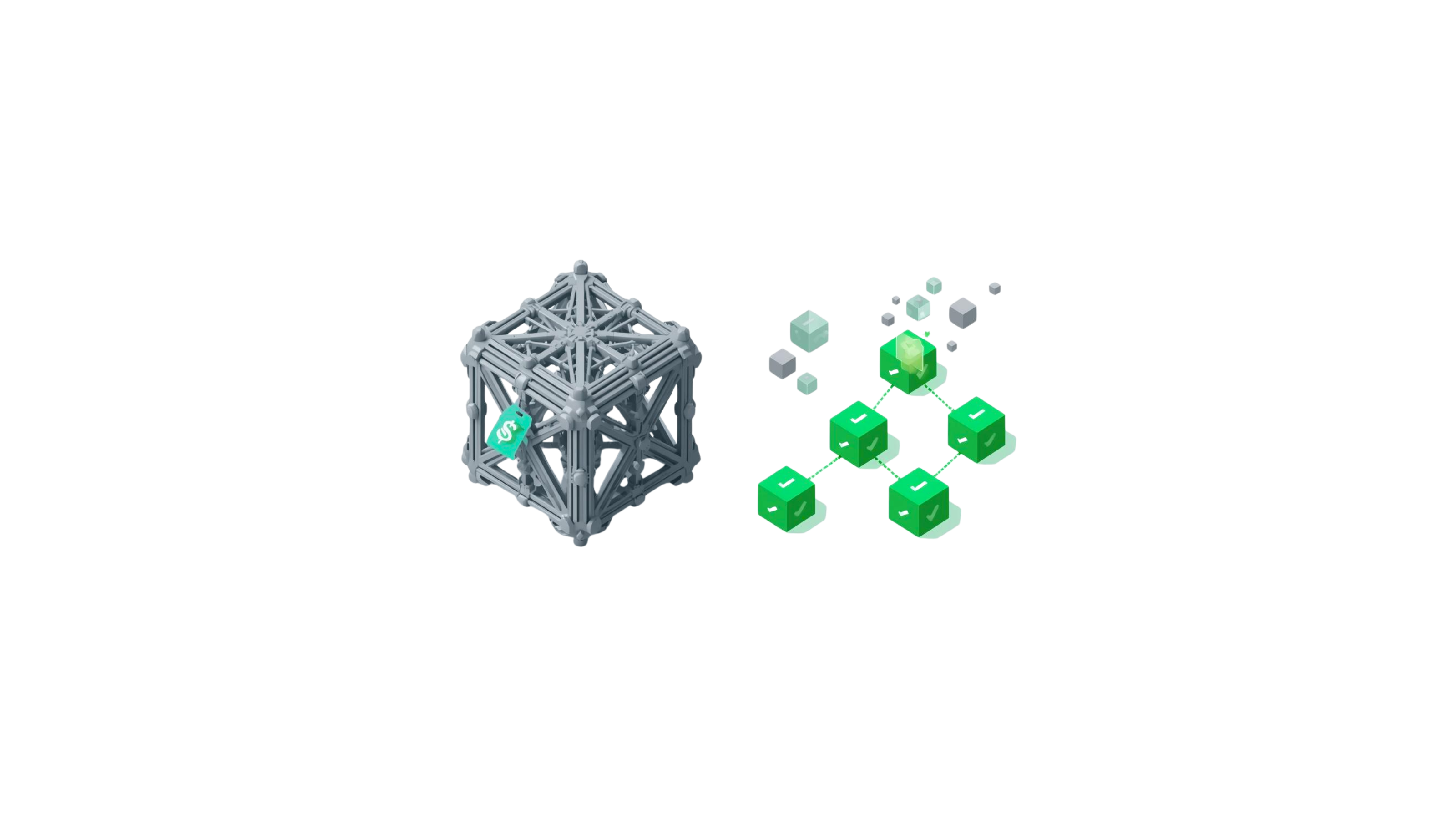
The industry conflates "bigger" with "better." This ignores basic math. Closing the last few percentage points of accuracy through model size costs exponentially more. Meanwhile, running a cheaper model multiple times and voting gets you higher accuracy at a fraction of the cost.
The Condorcet Math
If a model has 92% accuracy and you run it 5 times with majority voting, the probability of a correct majority isn't 92%; it's 99.5%. This is the Condorcet Jury Theorem applied to inference. As long as individual accuracy exceeds 50% and errors are somewhat independent, aggregating predictions crushes variance.
Model Comparison: Single Pass vs. Majority Vote
| Metric | Model X (SOTA) | Model Y (Smaller) |
|---|---|---|
| Base Accuracy | 97.00% | 92.00% |
| Cost per Run | $0.06 | $0.002 |
| Strategy | Single Pass | Majority Vote (5 runs) |
| Final Accuracy | 97.00% | 99.50% |
| Total Cost | $0.06 | $0.01 |
The smaller model wins on both accuracy and cost. This isn't theoretical. It's mathematical certainty rooted in the Condorcet Jury Theorem.
Cascades and FrugalGPT
Chen, Zaharia & Zou's FrugalGPT takes this further with cascade architectures. Every query hits the cheapest model first. A confidence check evaluates the response. Only low-confidence outputs escalate to expensive models. Research shows this cuts inference costs by up to 98% while matching or exceeding single-model accuracy.
Recent benchmarks on compute-optimal test-time scaling by Ye et al. found that a 7B parameter model using Best-of-N sampling outperformed GPT-4o and o1-preview on MATH-500. The "bigger is better" narrative isn't just expensive; it's wrong.
The superior system isn't a monolithic giant. It's a compound system orchestrating a fleet of models to optimize the cost-accuracy frontier.
Sources
Snell, C., Lee, J., Xu, K., & Kumar, A. (2024)
Scaling LLM Test-Time Compute Optimally Can be More Effective than Scaling Model Parameters
arXiv:2408.03314Chen, L., Zaharia, M., & Zou, J. (2023)
FrugalGPT: How to Use Large Language Models While Reducing Cost and Improving Performance
arXiv:2305.05176Ye, Y., et al. (2025)
Can 1B LLM Surpass 405B LLM? Rethinking Compute-Optimal Test-Time Scaling
arXiv:2502.06703